
 Blog
Blog 24-07-2024
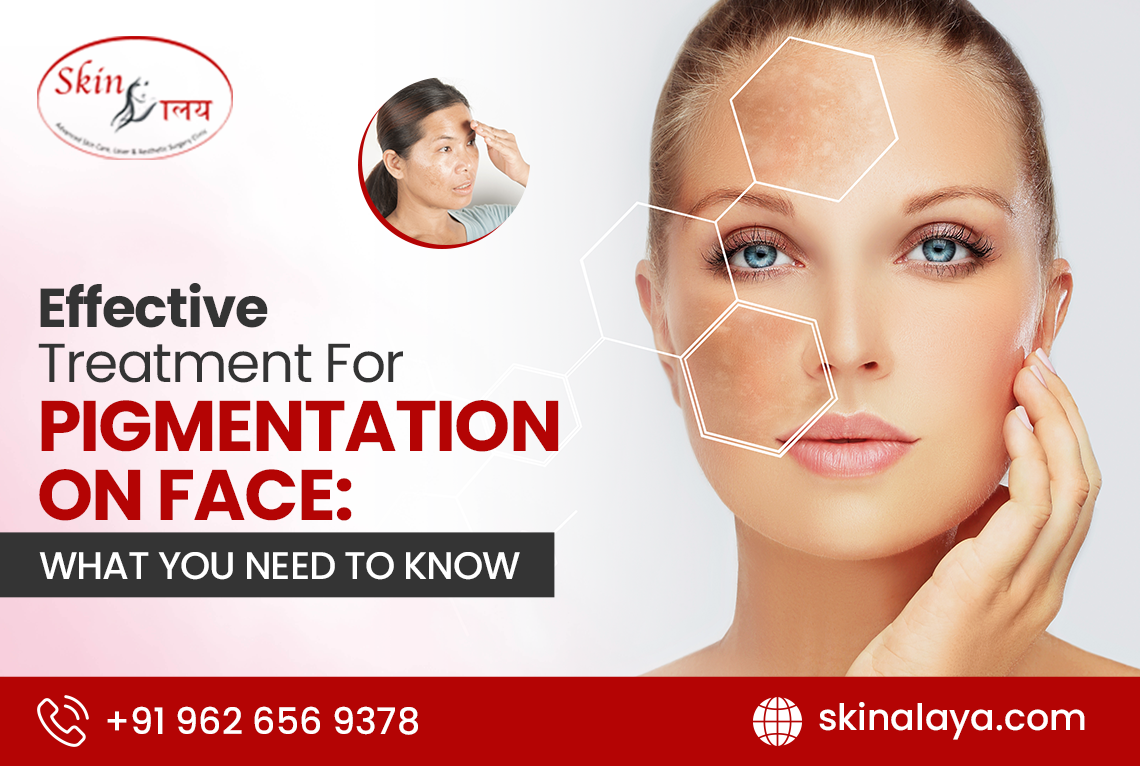
Nowadays, mostly people have pigmentation due to spending a lot of time in the sun, pollution, and poor eating habits. It’s a frustrating condition, and impacts a person’s confidence. Hyperpigmentation, characterised by darkened patches or spots on the skin, can result from a variety of factors including sun exposure, hormonal changes, acne scars, and ageing. Not only can these spots affect one’s physical appearance, but they can also impact self-esteem and confidence. But, you must not worry as there are effective treatments available that can help reduce the appearance of pigmentation and help restore a more even complexion.
Knowing what’s causing hyperpigmentation is crucial in selecting the most suitable treatment. Whether it involves over-the-counter topical solutions, prescription medications, or professional procedures like chemical peels and laser therapy, each approach offers its unique set of benefits. This blog will walk you through the most effective treatments, how they work, and what you can expect in terms of results and side effects. By understanding the options you have available, you can take proactive steps towards achieving clearer, more radiant skin.
The term "facial pigmentation" refers to uneven skin tone that results from the discoloration or darkening of the skin on the face. This condition may show up as patches of dark skin, dark blotches, or a generally dull complexion. Melanin, the pigment that gives skin its colour, is overproduced, and it’s considered the main cause of pigmentation. This overproduction can be caused by a number of things, including prolonged sun exposure, hormonal changes, some drugs, skin irritation, or injury. Even while pigmentation is normally benign, many people find that it causes them to have cosmetic concerns, which leads them to look for efficient treatments to get a more uniform complexion.
Facial pigmentation comes in a few main varieties, each with unique causes and traits. Melasma, sometimes known as the "mask of pregnancy," is associated with hormonal shifts and usually manifests as brown or grey-brown patches. Sunspots, sometimes referred to as age spots or liver spots, are the result of continuous sun exposure and typically develop on sun-exposed areas including the face, hands, and shoulders. Following a skin injury or inflammation, such as acne or eczema, post-inflammatory hyperpigmentation takes place, resulting in darker patches where the skin has healed. Determining the best course of action for therapy requires an understanding of the particular type of pigmentation.
Also Read:- Laser Treatment for Pigmentation - Transform Your Skin
Pigmentation can have a number of reasons. Some of the main reasons for hyperpigmentation include:
There are many ways of treating hyperpigmentation. The treatment is decided by the doctor only after a careful assessment of the patient. A skin specialist performs a thorough assessment of the skin, determines the cause of condition, and suggests personalised treatment. Some common treatment options for hyperpigmentation include the following:
The first line of defence against face pigmentation is frequently topical therapies. These include prescription drugs and over-the-counter treatments with substances such Kojic acid, hydroquinone, retinoids, and vitamin C. A skin-lightening substance called hydroquinone lowers the formation of melanin, while vitamin A-derived retinoids encourage cell turnover and lighten dark areas. Strong antioxidants like vitamin C lighten skin tone and lessen hyperpigmentation. Derived from fungus, Kojic acid also aids in whitening dark areas. Over time, regular use of these items can greatly improve skin tone and lessen pigmentation.
A chemical solution is applied to the skin during a chemical peel, which causes the skin to exfoliate and finally peel off. The skin's outermost layers are removed during this procedure, exposing younger, less pigmented skin underneath. Chemical peels come in three varieties: superficial, medium, and deep, according to the needed penetration depth and intensity. While deeper peels employ stronger acids, such as trichloroacetic acid (TCA), for more noticeable results, superficial peels utilise milder acids, such as alpha-hydroxy acids (AHAs), to gently exfoliate the skin. Chemical peels are a useful treatment for sunspots and melasma, among other types of pigmentation.
Also Read:- Effective Vitiligo Treatment: Restore Skin Color Naturally
By breaking down melanin in the skin with intense light beams, laser therapy targets pigmentation. Depending on the type and degree of pigmentation, several kinds of lasers are employed. Fractional lasers, for example, induce small skin lesions that stimulate the creation of collagen and encourage the formation of new skin. High-intensity light pulses emitted by Q-switched lasers precisely target and shatter pigment particles. Although laser therapy can yield impressive outcomes, it frequently necessitates several sessions and may require some recovery time.
Microdermabrasion is a minimally invasive procedure that uses a wand with a diamond tip or small crystals to exfoliate the skin. By removing the dead skin cells from the skin's outer layer, this procedure promotes the development of new, evenly pigmented skin. Treating superficial pigmentation and enhancing general skin texture are two areas where microdermabrasion excels. Because it is a rapid process with little recovery time, it is a popular option for people looking for steady progress.
Using small, sterilised needles to make microscopic punctures in the skin, microneedling stimulates the creation of collagen and elastin. This procedure lessens the appearance of pigmentation and revitalises the skin. To increase the efficacy of the treatment, topical serums with components like growth factors, vitamin C, or hyaluronic acid can be used with microneedling. It also enhances the general texture and tone of the skin, making it appropriate for a range of pigmentation types.
Also Read:- Laser Treatment Cost: Everything You Need to Know
Hyperpigmentation treatment varies from person to person. The skin specialists assess the skin carefully before deciding the right treatment for pigmentation on the face. Here’s how to choose the right treatment for pigmentation of face:
Accurately identifying the type of pigmentation you have on your face is the first step towards selecting the best therapy. Freckles, sunspots, post-inflammatory hyperpigmentation, and melasma are common varieties. A common cause of melasma is hormone fluctuations, which manifest as brown or gray-brown patches. Long-term sun exposure causes sunspots, also known as age spots, which are typically seen on sun-exposed areas. Following an injury or inflammation, such as acne, post-inflammatory hyperpigmentation develops. Little, concentrated melanin patches called freckles are made more noticeable by exposure to sunlight. Understanding the type of pigmentation is important since it affects the treatment option.
Different therapies work differently on different types of skin. For example, certain topical therapies such as hydroquinone or retinoids may irritate those with sensitive skin. Milder solutions, such as vitamin C serums or natural therapies, can be more appropriate in these situations. People with oily or acne-prone skin may benefit from salicylic acid-based products and other treatments that also help regulate sebum production. It can be helpful to know your skin type and its requirements in order to select a treatment that is both mild and effective.
Your choice of therapy will also be influenced by how severe your pigmentation is. Over-the-counter medications and natural remedies may be effective in treating mild pigmentation, but professional treatments such as chemical peels, laser therapy, or microneedling may be necessary for more severe cases. For example, topical treatments and light peels can often alleviate surface pigmentation, but more involved operations may be required for deeper pigmentation. To get the best results, it's critical to match the strength of the therapy to the degree of pigmentation.
Also Read:- Laser Stretch Mark Removal - Smooth and Flawless Skin
Combining different, suitable treatments can offer better outcomes than relying alone on one. Combining topical therapies with aesthetic procedures such as laser therapy or chemical peels, for instance, can increase overall efficacy of the treatment. In addition, maintaining the outcomes and preventing the formation of new pigmentation can be achieved by using preventive measures like wearing sunscreen every day. Pigmentation can be treated more successfully and long-lastingly by developing a thorough, multifaceted treatment plan in collaboration with a dermatologist.
Timely prevention and treatment of hyperpigmentation are essential to prevent it from worsening. If you notice signs of hyperpigmentation, ensure you immediately consult with an experienced dermatologist or skin specialist. Skinalaya is one of the best derma clinics in Delhi. If Delhi is a suitable location for you, then you can visit the Skinalaya clinic. They will carry out a thorough assessment of your skin and lay out a treatment plan based on your requirements.
