
 Blog
Blog 23-10-2026
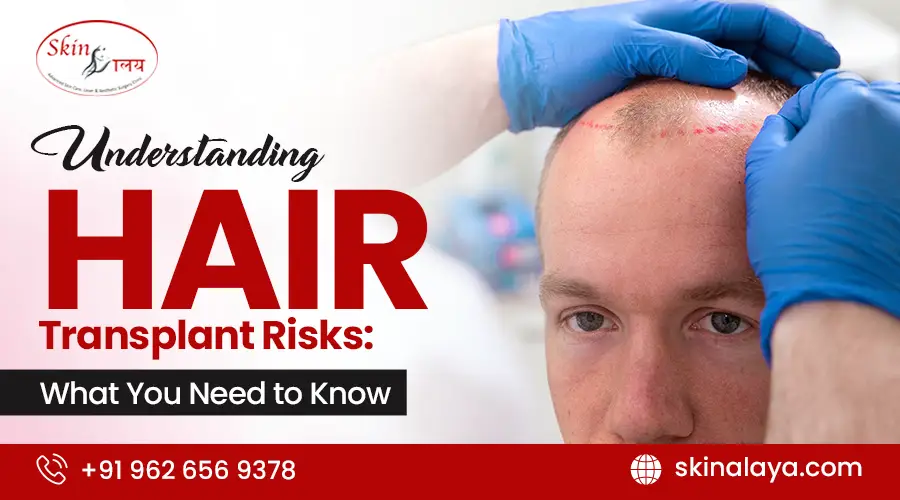
Hair loss isn’t just about appearance—it often affects confidence and self-esteem. That’s why many people consider hair transplants to restore not just their hair, but a sense of normalcy. But before going ahead, it’s important to ask a simple question: can something go wrong? The truth is, while most procedures are safe when done by experts, hair transplant risks do exist. Like any medical treatment, a hair transplant needs the right planning, the right hands, and the right setup. If you're thinking about it, understanding the possible downsides is just as important as knowing the benefits.
In simple terms, a hair transplant is when healthy hair is taken from one part of your scalp (usually the back or sides) and moved to an area where there’s thinning or baldness.
There are two popular methods:
Both methods have their pros and cons, and understanding them is key to evaluating potential hair transplant risks. But what’s more important is who is doing it and how it’s being done. That’s where things can either go right or terribly wrong.
Also Read:- Laser treatment for melasma
Here’s the reality: even a relatively simple procedure can become dangerous if not done by a qualified, experienced doctor. Below are some of the most common hair transplant risks — and yes, they can and do happen in real cases.
This is the most common risk. If the clinic is not maintaining hygiene, or if the instruments are not properly sterilized, you could get a serious infection.
In a recently reported case, two patients reportedly developed sepsis — a life-threatening infection that spread through the body. This isn’t something you recover from with a few antibiotics.
Avoid this by: Choosing a clean, certified clinic that follows strict medical hygiene standards. Understanding these hair transplant risks helps you make informed choices from the start.
A hair transplant usually requires local anaesthesia. But not everyone reacts the same way. In rare cases, people can have allergic or adverse reactions, which can quickly become critical if not managed properly.
Avoid this by: Sharing your complete medical history and allergy records with the doctor beforehand. Remember, even though it’s a cosmetic procedure, it still involves real medical care and safety checks. These hair transplant risks can be minimized with proper pre-operative planning.
Also Read:- Best Skin Rejuvenation Treatment in Rohini, Delhi
Some bleeding is expected, but excessive bleeding could indicate a bigger problem. Especially if you have an undiagnosed clotting disorder or are taking medications that thin your blood.
Avoid this by: Getting a proper pre-surgery health evaluation. A good clinic will never skip this step. Recognizing such hair transplant risks early can prevent complications during or after the procedure.
After the surgery, some pain and swelling are expected. But if the swelling spreads to your forehead, eyes, or face — or if the pain doesn’t reduce even with medication — something’s off.
Avoid this by: Following your doctor’s post-surgery instructions strictly and reporting any unusual symptoms immediately. Don’t ignore mild signs — they can be early indicators of serious hair transplant risks.
Also Read:- The Ultimate Guide to Korean Glass Skin
This is one of the most common complaints. The hairline looks artificial, or the density is uneven. Sometimes the haair grows in the wrong direction. That’s usually because the surgeon lacked the experience to make it look natural.
Avoid this by: Checking the doctor’s previous work, before-and-after photos, and reviews. Don't just go by Instagram reels.
FUE is usually marketed as "scarless", but that’s not 100% true. Small dot-like scars may still form. In FUT, a linear scar is expected. But if the stitches aren't done well, it can become thick or bumpy.
Avoid this by: Choosing a specialist who has handled many such cases. Not someone learning on your scalp.
It’s possible that after a transplant, you may lose some of your existing hair due to the trauma to your scalp. This usually regrows, but not always.
Avoid this by: Being mentally prepared and discussing this possibility with your doctor beforehand.
Yes, it happens. Sometimes the transplanted hair simply doesn’t grow. Maybe the grafts weren’t placed properly. Or they didn’t survive after being transplanted. That’s time, money, and hope — all gone.
Avoid this by: Not falling for "cheap packages". Quality graft survival depends on equipment, technique, and skill.
It sounds surprising, but yes, cysts can develop after a hair transplant. These small, sometimes painful bumps happen when hair follicles get trapped under the skin during the healing process. Usually, they’re harmless and go away on their own, but if ignored, they can become infected or leave scars.
Avoid this by: Keeping the transplant area clean and avoiding unnecessary touching or scratching. Regular follow-ups with your doctor help catch and treat any issues before they become a problem.
While extremely rare, death can occur if a hair transplant is done in unsafe conditions—by unqualified people or without proper medical care. Serious infections or complications can become life-threatening if ignored.
Avoid this by: Picking a trusted clinic with certified doctors and strict safety protocols. Never take shortcuts when it comes to your health.
Let’s face it: hair transplants have become big business in India. You’ll find clinics offering transplants at throwaway prices, promising celebrity-like results. But behind those social media ads, the reality is often disturbing.
If you’re paying ₹25,000 for a procedure that normally costs ₹2.5–4 lakh at a reputed clinic, you should be asking why. And whether it’s worth risking your life over it.
Also Read:- Understanding and Treating Black Spots on Legs
Here’s a simple checklist before you say yes to a transplant:
If the answer to any of these is “no”, walk away. Your hair is important, but your life is more important.
A hair transplant is not a quick-fix cosmetic treatment. It’s a surgical procedure, and it needs to be treated with the seriousness it deserves.
When done correctly, by skilled professionals in a safe environment, it can give great results. But if done by the wrong hands, it can turn into a nightmare.
So, do your research. Ask questions! Choose wisely.
If you're considering it, Clinic Skinalaya can guide you the right way. Our procedures are carried out by experienced dermatologists and Plastic surgeons with years of hands-on work, not just theory. We focus on safety, hygiene, and natural-looking results — without shortcuts.
Call us or book a consultation to see if a hair transplant is right for you. There’s no pressure, just an honest conversation.
Let your hair — and your confidence — grow back the right way.
